Kid-safe tech toys tested to ASTM F963 · CPSIA · EN71 · FCC — trusted by leading US retailers
0%

Electronic Learning Toys are moving from novelty products to practical tools for guided play, early coding, language practice, and STEM exploration. In a 2024 report, Grand View Research estimated the global educational toys market at more than USD 60 billion, with continued growth expected through 2030. Definitions differ across research firms, however. Some include books and traditional puzzles, while others count connected devices only. Buyers should read the methodology carefully.

The 2026 market will reward products that combine clear learning goals with safe, durable design. A child may tap a glowing alphabet panel, hear a pronunciation example, and repeat the sound without adult help. That small interaction matters. The OECD’s PISA research continues to show that digital access alone does not guarantee better learning. Product quality, teacher guidance, and home routines remain important. Technology is not the teacher.

Market research from Circana also shows that toy demand changes quickly with household budgets, regional trends, and seasonal purchasing. Global buyers therefore need more than attractive packaging. They should check battery life, language options, repair support, privacy controls, age grading, and documentation for each destination market. Independent testing and transparent supplier records provide stronger evidence than promotional claims.

Some forecasts appear overly confident.

This guide evaluates the 2026 Best Electronic Learning Toys for Global Buyers through an experience-led and evidence-based lens. It considers classroom usefulness, child engagement, materials, software reliability, and long-term value. The category still has gaps. Learning outcomes are not always measured consistently, and connected features can become distractions. Careful comparison remains necessary, especially when a product promises to make learning effortless.
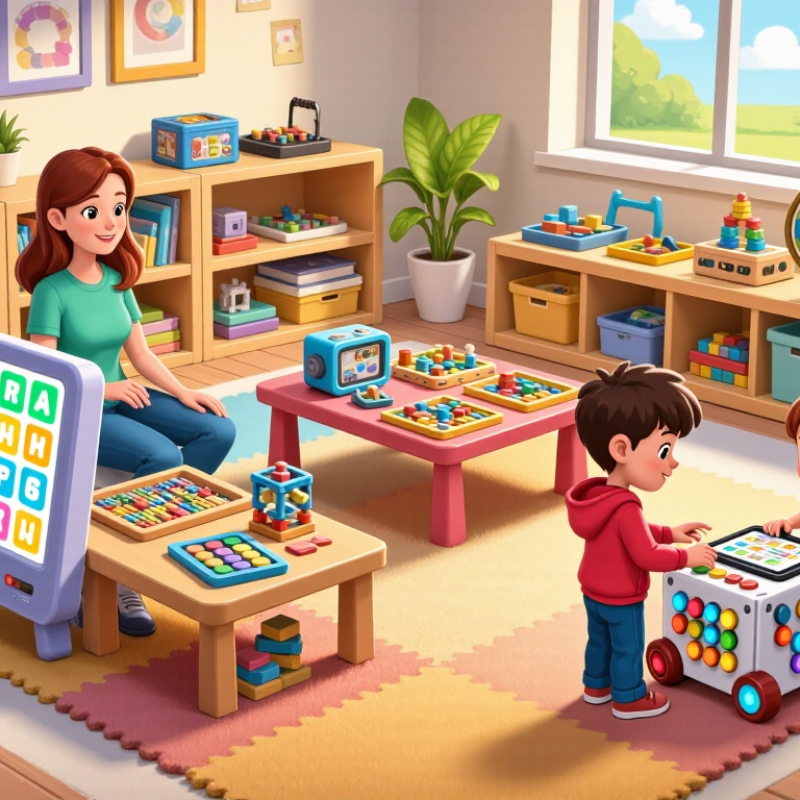
2026 Best Electronic Learning Toys for Global Buyers

What Electronic Learning Toys Are and Why They Matter in 2026

Electronic learning toys are play products that use light, sound, sensors, screens, or simple software to support learning. They can teach early language, counting, problem-solving, music, coding, and hand-eye coordination. Unlike passive entertainment, these toys respond to a child’s actions. A button may trigger a question, while a puzzle piece may create feedback.

In 2026, their value depends on thoughtful design, not flashy technology. Good toys match a child’s age, abilities, language, and attention span. They should offer clear instructions, adjustable volume, durable materials, and safe, non-toxic construction. Offline functions also matter. Internet access is not always reliable, especially for families buying across regions. Privacy deserves equal attention. Buyers should check data collection, parental controls, and update requirements before purchasing. These details support safer and more inclusive play. Still, technology cannot replace conversation, movement, or imaginative play. That mistake is easy to make.

Tips: Choose one clear learning goal. Test the controls before regular use. Look for large buttons and readable displays. Select language settings carefully for local learners. Watch how the child plays, not only the product description. If the toy causes frustration after five minutes, its educational promise may be overstated. Battery life, repair options, and recyclable packaging also affect long-term value. A small design flaw can become expensive when shipping crosses borders.

Key Features Global Buyers Should Evaluate

2026 Best Electronic Learning Toys for Global Buyers

Global buyers should evaluate learning value before appearance. A bright screen does not guarantee useful practice. Check whether the toy builds memory, language, logic, creativity, or motor skills. Activities should increase gradually, without making young users frustrated. Age guidance must match the child’s ability, not only the package label.

Hardware details matter in real classrooms and homes. Look for clear audio, responsive buttons, readable displays, and durable casing. Battery life should cover several sessions. Charging should be simple and safe. For international sales, review language options, power compatibility, instructions, and replacement support. Data settings also deserve attention. Connected toys should explain what information they collect and how adults can control access. Independent safety testing and transparent documentation add credibility.

Tips: Test a sample for one week. Watch how children use it without help. Check for confusing menus, weak hinges, and distracting sounds. Ask suppliers for test reports, material details, and carton measurements. Confirm the product suits local learning habits. A useful feature in one market may feel unnecessary elsewhere. Also, do not trust every impressive specification. I have seen products promise advanced learning, yet offer only repetitive tapping. Leave room for boredom, too; children may abandon even a well-designed toy.

2026 Best Electronic Learning Toys for Global Buyers

Key features global buyers should evaluate before sourcing electronic learning toys. The scores represent a practical evaluation framework on a 100-point scale.

Safety and compliance should be the first checkpoint, followed by age-appropriate learning value, language adaptability, privacy protection, durability, offline functionality, and accessibility. Buyers should verify applicable requirements such as EN 71, ASTM F963, CPSIA, GDPR-related child data rules, and local import regulations for each target market.

Top Electronic Learning Toy Categories by Age and Skill

For global buyers, electronic learning toys should match developmental goals, not just age labels. Circana’s 2024 Global Toy Industry Report recorded a 7% sales decline across 12 major markets in 2023, while average toy prices rose 4%. This makes purposeful purchasing more important.

For ages 0–2, choose simple sound, light, and cause-and-effect toys with large controls. Caregiver interaction still matters.

For ages 3–5, language boards, electronic story tools, and sequencing games can support vocabulary and early logic. Keep sessions short.

For ages 6–8, coding puzzles, digital microscopes, and math games can develop problem-solving skills.

For ages 9–12, robotics kits, programmable sensors, and strategy systems encourage systems thinking and creative testing.

The 2023 OECD Digital Education Outlook stresses that technology supports learning best when paired with clear teaching objectives, rather than passive consumption. That distinction is easy to miss.

Product evaluation should include volume limits, durable parts, readable instructions, and transparent data practices. The European Commission’s 2023 Safety Gate report identified thousands of dangerous product alerts across consumer categories, reminding buyers to check compliance documentation carefully.

Age labels are useful, but imperfect. A child’s language background, motor skills, and patience can change the experience.

I would test one activity before buying classroom quantities.

Some “smart” toys still offer little learning value. The buttons may flash, yet the child may only repeat one action. That is a design weakness, not a learning breakthrough.

Safety, Compliance, and Quality Standards for International Markets

Electronic learning toys now cross borders with batteries, sensors, speakers, and connected software. Safety must travel with every component. The European Commission’s 2024 Safety Gate report recorded more than 4,000 product alerts. This signals persistent risks in consumer goods, including children’s products.

Global buyers should request test reports for electrical safety, battery protection, small parts, flammability, and chemical migration. Applicable standards may include EN 71, ASTM F963, IEC 62115, and regional substance restrictions. Requirements differ by destination. One certificate rarely covers every market. Confirm the testing laboratory’s accreditation and report scope. Check production samples, not only documents.

During factory inspections, practical details often reveal weaknesses. A loose battery cover, sharp molding edge, or unclear charging label deserves immediate review. Software also needs age-appropriate privacy controls and secure updates. The OECD’s Digital Economy Outlook highlights growing risks around children’s digital exposure and data use. A quality plan should therefore include technical security checks. It should also define who responds to defects after shipment.

Some inspection routines remain too checklist-driven. That is uncomfortable, but real. Product quality can change after tooling adjustments or supplier substitutions. Keep sealed samples, batch records, and corrective-action evidence. The U.S. Consumer Product Safety Commission’s annual reporting continues to show the importance of incident tracking and recall readiness. Buyers should test traceability before a problem occurs. Small gaps become expensive quickly.

How to Select Suppliers, Compare Costs, and Plan Global Distribution

2026 Best Electronic Learning Toys for Global Buyers

Selecting suppliers requires more than comparing catalog photos and quoted prices. Ask for product samples, factory details, production capacity, and current safety test reports. A reliable supplier should explain battery protection, material quality, software updates, and quality-control checks clearly. Request a sample from the same production line used for bulk orders. Small details matter, such as loose charging ports or unclear buttons. My early buying mistake was trusting a low quotation before testing durability. It saved money on paper, but created expensive replacements later.

Compare total landed cost, not only the unit price. Include tooling, packaging, inspection, freight, insurance, import duties, and possible returns. A slightly higher quote may offer stronger packaging and fewer damaged units. Payment terms also affect cash flow. Ask whether prices change with exchange rates or component shortages. Keep written records for every revision. My calculations are not always perfect, especially when freight rates move quickly.

Tips: Build a supplier scorecard with quality, communication, lead time, documentation, and cost. Test samples with children in the intended age group, under adult supervision. Confirm carton dimensions before booking transport. Plan distribution through regional warehouses when delivery distances are long. Maintain spare inventory for seasonal demand, but avoid excessive stock because electronic products can become outdated. Check destination requirements early, and ask qualified local professionals to review product documents before shipment.

2026 Best Electronic Learning Toys for Global Buyers - How to Select Suppliers, Compare Costs, and Plan Global Distribution

Supplier Selection, Cost Comparison, Compliance, and Global Distribution Planning Matrix
Product Category Typical Learning Function Indicative Factory Price
per Unit (USD)
Common MOQ Typical Production Lead Time Key Supplier Evaluation Criteria Main Compliance and Safety Considerations Distribution and Cost Planning Notes
Electronic Reading Pens Audio-assisted vocabulary, pronunciation, early reading, and interactive book learning. $4.50–$12.00 500–2,000 units 30–60 days after artwork, software, and sample approval. Verify language accuracy, audio-storage capacity, firmware update process, battery quality, and content licensing rights. Battery transport documentation, toy safety testing, electromagnetic compatibility, and privacy review if user data is collected. Printed books and software localization may create separate tooling and content costs. Protect the pen tip and charging port during ocean transport.
Interactive Learning Tablets Basic literacy, mathematics, music, puzzles, visual recognition, and guided lessons. $18.00–$55.00 300–1,000 units 45–90 days, excluding operating-system customization. Assess processor stability, screen durability, parental controls, battery cycle performance, repairability, and long-term software support. Radio, electrical, battery, chemical-substance, and child-product requirements vary by destination. Internet-connected models require data-security controls. Landed cost can rise significantly because of batteries, protective packaging, customs classification, warranty reserves, and reverse logistics.
Programmable Coding Robots Sequencing, problem solving, introductory coding, logic, and STEM project work. $22.00–$70.00 200–800 units 45–75 days for standard models; longer for customized applications. Test coding-app compatibility, sensor accuracy, spare-part availability, lesson quality, multilingual support, and firmware stability. Bluetooth or Wi-Fi functions may require radio approvals. Check small-parts warnings, battery safety, app privacy, and age grading. Ship replacement wheels, cables, and sensors with initial orders. App-store availability and regional connectivity should be checked before launch.
Electronic STEM Building Kits Circuits, energy, magnetism, mechanical systems, and hands-on experimentation. $8.00–$35.00 500–2,000 units 30–60 days for standard components and packaging. Check component tolerance, connector durability, instruction clarity, child-safe materials, parts-count accuracy, and replacement-part supply. Electrical safety, accessible battery compartments, sharp-edge controls, choking-hazard assessment, and material declarations are important. Kits with many small components need efficient packing and accurate inventory control. Consider multilingual instructions and local educator guides.
Electronic Musical Learning Toys Rhythm, sound recognition, melody creation, coordination, and basic music concepts. $6.00–$28.00 500–1,500 units 30–60 days, depending on molds and sound customization. Evaluate sound-level limits, button life, speaker quality, battery access, recording functions, and resistance to repeated impact. Toy safety, electrical safety, electromagnetic compatibility, noise exposure, and privacy requirements for recording-enabled products. Large molded parts increase volumetric freight cost. Use retail-ready packaging that protects keys, switches, and speakers.
Interactive Projection and Drawing Devices Tracing, visual matching, drawing practice, storytelling, and spatial learning. $20.00–$65.00 300–1,000 units 45–90 days, especially when optics or software are customized. Confirm image brightness, optical safety, heat management, calibration consistency, lamp or LED life, and content-update procedures. Electrical, optical, thermal, electromagnetic, and chemical-substance requirements may apply. Avoid claims that imply medical or therapeutic use. Measure packed dimensions carefully because projection bases can be bulky. Regional power plugs and voltage requirements must be specified.
Smart Plush and Voice-Interactive Toys Storytelling, conversational prompts, emotional vocabulary, and language practice. $12.00–$45.00 500–1,500 units 45–90 days, with additional time for voice content and software testing. Review microphone performance, response accuracy, cloud dependency, content moderation, data retention, and the supplier’s incident-response process. Strong privacy and child-data controls are required in many markets. Also assess toy safety, flammability, battery safety, and washable-material claims. Cloud hosting, speech services, customer support, and subscription costs can exceed the original product margin. Plan an offline fallback where possible.
Electronic Language Learning Devices Vocabulary, pronunciation, spelling, listening exercises, and multilingual practice. $10.00–$40.00 300–1,000 units 45–75 days, depending on content and localization scope. Verify native-speaker review, accent coverage, content ownership, translation quality, update support, and accessibility features. Review toy safety, radio requirements for wireless models, privacy terms, accessibility claims, and age-appropriate content controls. Budget separately for translation, voice recording, proofreading, customer service, and region-specific educational expectations.
Electronic Math and Quiz Devices Arithmetic, number recognition, timed quizzes, memory, and adaptive practice. $5.00–$22.00 500–2,000 units 30–60 days for standard hardware and localized content. Test answer logic, calculation accuracy, display readability, button response, difficulty progression, and content alignment with target curricula. Assess toy safety, battery compartment security, screen or LED safety, age grading, and advertising claims about educational outcomes. Low unit value makes freight and handling efficiency important. Consolidated shipments and compact packaging can improve margin.
Electronic Drawing Tablets Handwriting practice, sketching, shape recognition, creativity, and fine-motor development. $5.00–$25.00 500–2,000 units 30–60 days, with longer timing for customized molds. Inspect writing sensitivity, screen contrast, erase-button durability, stylus tether strength, drop resistance, and replacement-stylus supply. Battery type, electronic components, material restrictions, small parts, and age grading should be reviewed for each target market. Lightweight products are suitable for parcel fulfillment, but protective packaging is needed to prevent screen and stylus damage.
Rechargeable Learning Devices Combines audio, visual, gaming, reading, coding, or language functions in one portable unit. $15.00–$60.00 300–1,000 units 45–90 days, excluding certification and software localization. Check battery management, charging-port life, thermal performance, software updates, warranty repair procedures, and spare-battery policy. Lithium-battery transport rules, electrical safety, electromagnetic compatibility, chemical-substance restrictions, and recycling obligations may apply. Air freight can be restricted or more expensive for lithium batteries. Ocean freight usually reduces unit freight cost but increases transit time.
Classroom Interactive Kits Group experiments, collaborative problem solving, science demonstrations, and teacher-led activities. $35.00–$150.00 100–500 kits 45–90 days, depending on kit complexity and teacher materials. Evaluate curriculum quality, teacher training, classroom durability, replacement-part logistics, documentation, and batch traceability. Confirm safety testing for every included component, clear instructions, hazard labeling, and suitability for the stated age range. Institutional buyers often require quotations, samples, training, and delivery schedules. Palletized freight may reduce handling damage.

FAQS

What are electronic learning toys?

They use lights, sounds, sensors, screens, or software to support learning. A button may ask a question. A puzzle piece may provide feedback.

What skills can these toys support?

They can support early language, counting, problem-solving, music, coding, and hand-eye coordination. Choose one main learning goal.

What should buyers check before purchasing?

Check age suitability, instructions, volume controls, durable materials, and safe construction. Large buttons help younger children play independently.

Why are offline functions useful?

Internet access may be unreliable across regions. Offline play also reduces dependence on updates and connected services.

How should families consider privacy?

Review data collection, parental controls, and update requirements. Connected features should use age-appropriate settings. Privacy is easy to overlook.

What safety documents should international buyers request?

Request reports covering electrical safety, batteries, small parts, flammability, and chemical migration. Confirm the laboratory’s accreditation and report scope.

Is one certificate enough for every market?

Usually, no. Requirements differ by destination. One certificate may not cover every regional rule.

What physical defects deserve immediate attention?

Inspect loose battery covers, sharp edges, unclear charging labels, and fragile parts. Small defects can become costly after shipment.

How can buyers verify consistent production quality?

Inspect production samples, not documents alone. Keep sealed samples, batch records, and corrective-action evidence. A checklist alone is not enough.

Can electronic toys replace conversation and imaginative play?

No. Children still need conversation, movement, and open-ended play. Technology can support learning, but it cannot provide everything.

Conclusion

Electronic Learning Toys are becoming an important part of modern childhood development in 2026, combining play with interactive learning, creativity, problem-solving, language development, and early digital skills. For global buyers, the best products should offer age-appropriate content, intuitive controls, durable construction, engaging feedback, adjustable difficulty, and options for multilingual or culturally adaptable learning. Categories may include early-learning devices for toddlers, coding and STEM toys for school-age children, language and literacy tools, creative music products, and advanced skill-building kits for older learners.

International purchasing also requires careful attention to safety, material quality, battery protection, data privacy, labeling, testing, and compliance with the destination market’s applicable standards. Buyers should assess supplier experience, production capacity, quality-control systems, customization services, minimum order quantities, and communication efficiency. A complete cost comparison should include product pricing, packaging, testing, shipping, taxes, and after-sales support. Reliable forecasting, suitable regional warehouses, and flexible distribution plans can help reduce delays, control expenses, and ensure consistent product availability across global markets.

Amelia

Amelia

Amelia is a professional marketing specialist and a trusted voice behind the company’s expert blog. With a strong understanding of the company’s products, services, and customer needs, she translates complex information into clear, practical, and engaging content for readers across different......